

The advancement of mobile photo and video capture takes another leap forward thanks to new iPhone Spatial Video features and the Cinematic Mode of Apple. It made features like this revolutionary and changed the way we record and watch moments in life and put professional-quality video recordings in our pockets. This all-inclusive tutorial will cover all the basic and advanced stuff about how to control these groundbreaking additions to your iPhone.
Understanding iPhone Spatial Video
iPhone Spatial Video is a great leap from how we document an event that can be remembered and shared again and again. Unlike regular recording devices, spatial video also records depth information in addition to streaming ordinary visual information, which makes it very realistic. This creates a phenomenon in which viewers can become immersed in their memories in a way that was not available before with a simple video camera.
That is the power of an iPhone spatial video photo camera that is packed with a dual-lens that captures different angles of the same picture. They are then integrated to generate a depth-rich video that can be played back on compatible devices to provide a completely novel manner of viewing recorded events.
Setting up your iPhone Spatial Video Recording
Before getting started, it is very important to correctly set up your iPhone to start spatial video recording. As we found, modern iPhones that support spatial video recording need certain configurations for the best performance. First of all, turn on your camera settings and activate the potential for producing spatial video. This is essential in understanding how to shoot iPhone spatial video, and it will also let you know if there are any extra procedures or changes to be made in order to ensure that all is well.
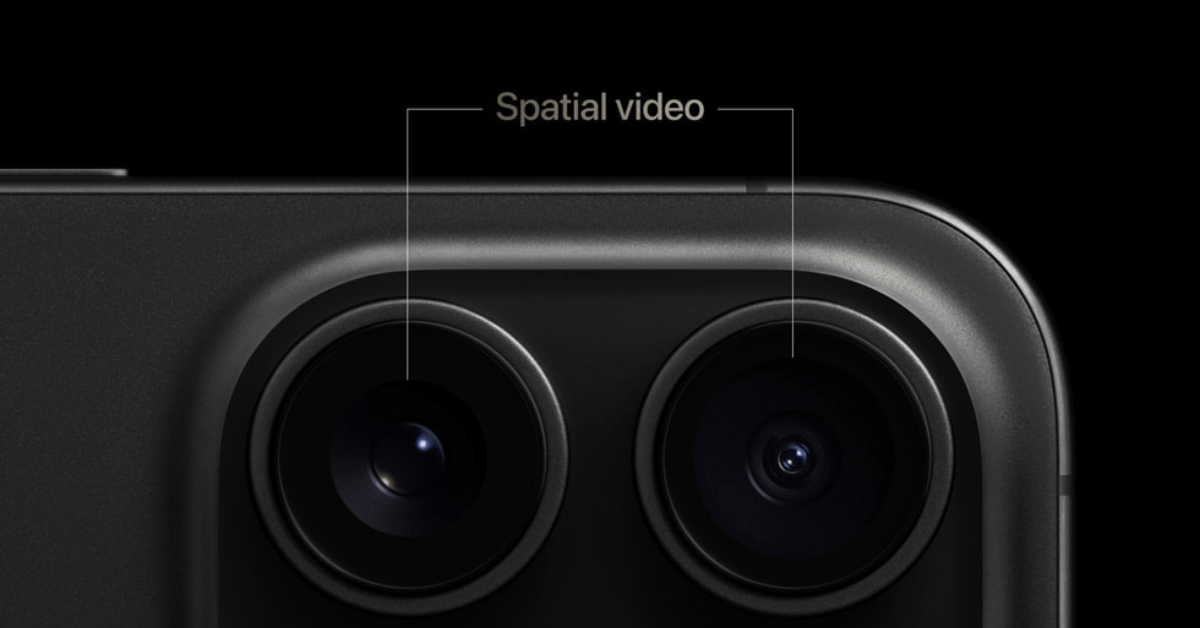
Remember that iPhone Spatial Video looks best in well-lit conditions and with 6a clean, clear subject. The feature greatly depends on the cooperation of both front and rear cameras, so to obtain much better results, try to keep your lenses clean and use the right lighting.
Mastering Cinematic Mode
Cinematic Mode is another advancement in iPhone videography that declares Hollywood-style bokeh results easy to achieve. This feature enables background bokeh that would in any case come with a cinematic-style camera and at the same time put the subject into focus.
The elements include the dated clothing, The twilight appearance, the repetition use of fixing gazes on the object, maybe a prescription bottle, and The somber atmosphere of the music in the background.
What stands out in this mode is that when filming, the subject is automatically detected and followed by focus. The system constantly scans this scene for subjects before enhancing focus on them or lacking focus on them. How to make Cinematic Videos with iPhone becomes straightforward with this mode, helping you achieve a professional-looking video that directs viewers’ attention to the intended subject with the background as an aesthetically pleasing blur.
Advanced Techniques and Tips
To maximize your results with Cinematic Mode, consider these advanced techniques:
- Mainly keep your distance from the subject (most often they should be 2–8 meters away).
- Lighting should be as natural as possible whenever it is convenient.
- Adventure: Use foreground and background space to add two levels of depth.
- They should change orientation and shift their weights.
Integration of spatial video with Cinematic Mode
The capabilities of the iPhone in videography are most realized when applying Cinematic Mode to the iPhone Spatial Video mixture. Although both of these features have different uses when it comes to increasing the number of views on your channel and helping your videos gain new audiences, knowing how to maximize the use of both of them can take your videos to a whole new level. Reflections on how SDI can augment facial focus to generate effective aesthetic dramas: the role of spatial depth information in cinematic focus effects.
Guidelines on Shooting Spatial Videos
It is crucial to many of the strategies about iPhone Spatial Video success to note certain factors. Lighting is very important natural light should be the standard, but well-lit indoor scenes can work as well. The motion must be as slow and precise as possible to ensure the system records a consistent field depth in your video.
Environmental Considerations
Chapters four and five show how various environments require different strategies and approaches to spatial video recording. Differently, proportioned interior spaces can introduce some playful dimensionality; further, natural depth outdoors exists as well. Knowledge of how certain environment influences spatial video quality is useful in selecting the right places to shoot.
Post-Production and Editing
As with any pornography production, there are various ways to boost your iPhone spatial video content after filming the scenes. Lucas’s modern postproduction programs enable us to change the depth effect, focus areas, and general appearance of the videos. The only thing that must be understood is to design with improvement but not to overdo it and make it almost look unnatural.
Storage and Sharing Considerations for Spatial Videos
Compared to normal videos, spatial videos occupy more space as they contain both depth information. Knowing your storage solution and the options for sharing will help you be able to manage and distribute your content properly.
Special Applications and Aesthetic Function
Expands new creative expressions for personal and/or professional functions and uses. Whether for personal use or professional purposes, family photos or movies are done well; hence, they can be applied in various avenues. It might probably be effective to try out the subject matter facing different situations in order to find out how this capability can be used in a more creative manner.
Further Consequence and Extension
In addition, with regard to the dynamics of modern technology, it becomes possible to identify new functions and abilities. Combining spatial video with augmented and virtual reality can pose several opportunities for future work and experiences.
Software Requirements: Technical and Compatibility
Knowledge of technical specifications helps to guarantee the highest possible iPhone spatial video performance outcome. This includes which iPhone models support the feature, the needed iOS versions, and compatible viewing gadgets.
Main Problems and Their Workarounds
However, when applying iPhone Spatial Video technology, it is important to note that users may experience different difficulties. If you follow practical knowledge dealing with the most common problems and how to avoid them, the recording quality will be constant.
Conclusion
iPhone Spatial Video While being based on the Pixel 3 and Pixel 4 Night Sight and Cinematic Modes, respectively, Night Sight and iPhone Cinematic Mode are giant leaps forward in mobile videography, providing users with unparalleled ability and freedom. This guide outlines the basic principles of each and provides best practice advice so that you can produce unique, glossy, and memorable content that can compete in today’s media world. Presumably, as the technology progresses, these tools will only become more advanced, freeing up new avenues to artistic feeling and memory representation. The essence is to never stop experimenting and practicing to get closer to iPhone video possibilities.
FAQs
Why does my iPhone Spatial Video look so pixelated or not smooth?
This is mostly because of low light when recording or when the camera is moving around very fast. There should be appropriate lighting during the recording, and keep moving steadily when filming. A clarity of lenses and steady movement obviously enhance outcomes.
Is iPhone Spatial Video modifiable after recording has been done?
Yes, you can edit spatial videos, as you can use every other editing software that is compatible with spatial video editing. However original depth information should not be compromised while exporting and while using appropriate export settings and compatible editing tools.