

In the environment of fast-improving mobile devices, the key feature that has been unveiled by Apple is called Spatial Video, and it really has the potential to revolutionize how we capture our moments. Learning How to shoot iPhone Spatial Video reveals a new level of narrative that allows the user to build an interactive story and incorporate 3D vision when witnessed under the Apple Vision Pro device. The following all-encompassing article will provide you with the information required about this innovative creation.
Understanding Spatial Video: The Basics
However, to know what How to shoot iPhone Spatial Video, it’s necessary to understand what makes this technology unique. Spatial video, therefore, records depth information in addition to video capture to provide an approximation of depth. Any time such videos are watched on compatible screens, it ensures that one feels as if he/she is there since the videos are shot on location.
The technology behind How to shoot iPhone Spatial Video indeed relies on the iPhone’s multiple lenses on the back of the smartphone and ensures depth-heavy content. This subtle way of capturing video is a great step up in mobile video capturing that gives laymen the ability to create excellent 3D videos. For those wondering how to make cinematic videos with iPhone, leveraging this depth-capturing ability opens up creative possibilities for immersive storytelling.
Required Equipment and Setup
To begin shooting spatial video, you’ll need:
- Apple iPhone mobile phone operating iOS 17.2 or later The iPhone is an iPhone 15 Pro/15 Pro Max.
- Space (Spatial videos are known to need more space than usual videos).
- Good lighting conditions
- Steady hand for target or stabilization equipment
The beauty of How to shoot iPhone Spatial Video is this: as advanced as the technology behind it is, the actual process is not overly complicated for people. It can be explained that Apple has positioned this feature to be a part of the default camera application and thus is quite simple to work with.
Activating Spatial Video Mode
Learning How to shoot iPhone Spatial Video begins with the right activation. Here’s the process:
- Now turn on your iPhone, and you go to the settings of your iPhone immediately.
- Navigate to camera settings.
- Scroll down to find “Formats.”
- Check “Spatial Video for Apple Vision Pro.”
As soon as the animation has been played on your iPhone, your little device is capable of recording 3D material. For better spatial capture, the camera app will be able to set the best-preferred settings possible.
One of the most important aspects of technologizing spatial video capture is mastering this art.
It is to accurately grasp how it is supposed to be done correctly about How to shoot iPhone Spatial Video. When filming, ensure that your iPhone is in the landscape position because that will yield the best results. This orientation enables both cameras to acquire as much spatial information about the environment as possible.
Lighting Considerations
When learning How to shoot iPhone Spatial Video, adequate light is very important. As previously stated, natural light is the best, but well-illuminated indoor conditions can also yield great results. Do not let yourself stay in very bright or very dark environments; for the rangefinder to work well, the lighting must be just right.
Movement and Stability
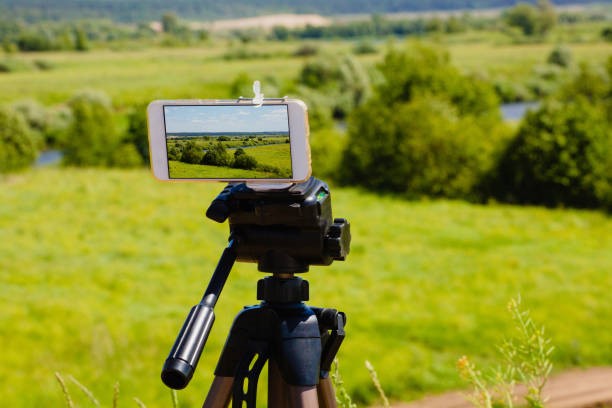
In other words, the motion obtained while recording has to be fluid and stable while capturing spatial video. Unpredictable head motions, or even abrupt head twists, may reduce the impact of creating a spatial feeling. If you want better-quality of video, then you should consider using a stabilizer or a gimbal if you are recording yourself walking or running.
Subject Distance and Framing
When learning How to shoot iPhone Spatial Video, distance matters a lot. The best range of that record should be made between 3 and 8 feet from your subject. This range ensures that the cameras obtain the best depth information while at the same time being clear and providing a detailed view.
Enhanced Methods for Improved Spatial Videos
Scene Composition
Successful How to shoot iPhone Spatial Video requires an understanding of the concept of scene composition. Level of depth in your scene there should be foreground, middle, and background items, as these will provide perspective. There is higher interaction with respect to the spatial experience when objects of varying distances are incorporated.
Movement Patterns
- When recording, try incorporating subtle camera movements:
- Another movement that is made is gentle rocking, forward and backward, and side to side.
- Slow movements forward or backward, towards or away from the camera.
- Twirling within the area surrounding the targets or objects
They also increase the spatial effect and produce more engaging content.
Post-Production and Sharing
Once you complete the recording of your spatial video, you have to know more about sharing and viewing possibilities. For now, these videos can only be watched in their full splendor in the context of space on the Apple Vision Pro and are seen as normal videos on any other supportive device. This way, your site will always be comprehensible to any person, and the visualizations will be convenient for those who have appropriate hardware.
Storage Management
Unlike the other videos, spatial videos use more storage space. Daily check your storage and adjust it properly to have enough space for new recordings. For instance, you may wish to copy your spatial content to iCloud or outer storage to save on the device.
General Difficulties and Their Remedies
When learning How to shoot iPhone Spatial Video, there may be some issues that you are likely to meet. Low light levels mean that less depth information can be retrieved from the image, and fast motion leads to blurred images or the total absence of spatial data. And, spending time in this exercise will assist you in generating better content because of a clearer understanding of the existing limitations.
It is therefore important to look at the best practices most suitable for different circumstances.
Indoor Recording
While photographing inside environments, focus on the light situation and space between the object and the lens. Do not use backgrounds that will complicate the perception of the depth sensors.
Outdoor Recording
Recording in outdoor environments is usually characterized by How to shoot iPhone Spatial Video. Widespread use of natural light and different terrains provide excellent conditions for creating depth-focused material. But while recording, avoid very bright lighting conditions and objects that have moving cast shadows.
Action Sequences
While recording action, ensure constant movement of subjects and ensure they remain within the right exposed distance range. Objects that move quickly could be difficult to capture in spatial video; hence, time it and trace some movements.
Future Possibilities
As we proceed with the study of How to shoot iPhone Spatial Video, then this technology is prone to improvement. Things may change in the future, with updates that can add new features and functionality to the pieces, so that spatial video creation becomes even more versatile.
Conclusion
Mastering how to shoot iPhone Spatial Video introduces new opportunities for content producers as well as ordinary consumers of audiovisual content. With features like Cinematic Mode, this technology has greatly revolutionized how we record our encounters and the impressions we get. The next time you want to share moments in a spatial environment, make use of the techniques outlined herein, and you are sure to capture those special moments in a way that is most captivating to the viewers.
FAQs
Are the spatial videos alterable after a recording is made?
Yes, you can edit spatial videos using the Photos app on the iPhone. Simple trimming and adjustments are possible, together with preserving the spatial information. However complex adjustments can interfere with the spatial characteristics of the images formed on the video strip.
Will spatial videos put more pressure on storage devices?
Yes, spatial videos will take much more space than traditional videos because of the extra-depth data. As for the storage requirements, the research shows that on average, spatial videos should take 1.5–2 times more storage space than ordinary videos of the same length and quality.